by
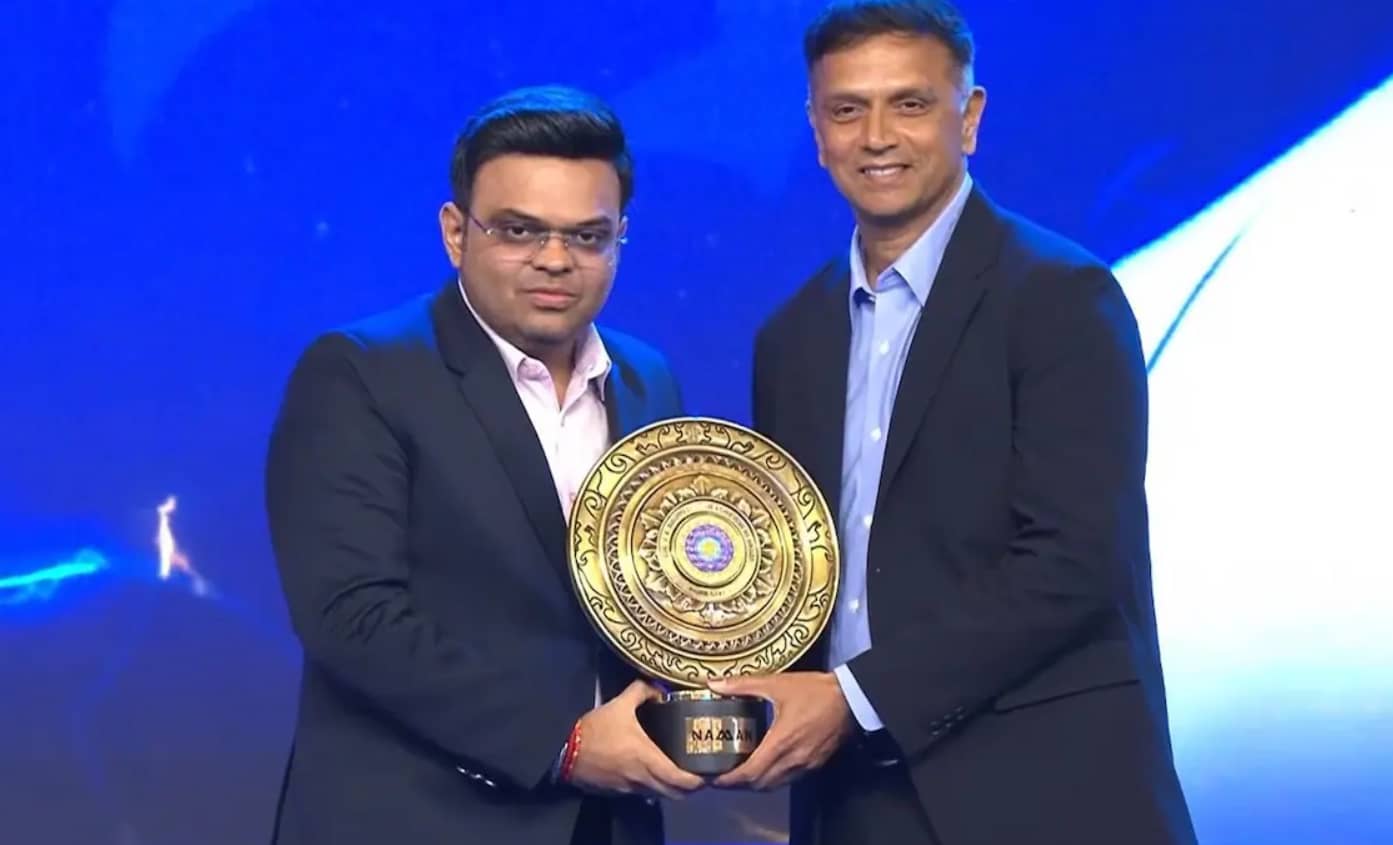
by Rahul Dravid joins Indian cricket’s most exclusive club.
The BCCI will honor him with the CK Nayudu Lifetime Achievement Award at the March 15, 2026, NAMAN ceremony in New Delhi.
He’s the 32nd legend to receive this recognition since the tradition began.
The BCCI Lifetime Achievement Award winners list doesn’t just track playing careers.
Dravid’s selection reflects both his 13,288 Test runs and his 2024 T20 World Cup coaching triumph.
The board values complete cricket contributions.
BCCI Lifetime Achievement Award Winners List
Source: BCCI
Origins of the CK Nayudu Award
The BCCI launched this honor in 1994. They named it for CK Nayudu, who led India in their first-ever Test match against England in 1932.
The award carries weight because selections happen carefully.
Most winners retired 10-20 years before receiving the honor. This gap lets the BCCI assess the total impact.
Playing statistics form the foundation, but post-retirement roles in coaching, commentary, and administration count equally.
The same ceremony features Shubman Gill receiving the Polly Umrigar Award. That recognizes the year’s best international cricketer.
Gill led India’s fightback in England while scoring heavily. Different awards with different timings.
Complete BCCI Lifetime Achievement Award Winners List Till 2026
The full record tells Indian cricket’s story through its greatest contributors. Early winners built the game when India struggled internationally. Recent honorees represent a cricket superpower.
| Recipient | Award Year | Type | Playing Era | Tests Played | Key Numbers | Greatest Moment |
|---|---|---|---|---|---|---|
| Lala Amarnath | 1994 | All-rounder | 1933-1952 | 24 | 878 runs, 45 wickets | India’s first Test century (118 vs England, 1933) |
| Syed Mushtaq Ali | 1995 | Batsman | 1934-1952 | 11 | 612 runs | First overseas century for India (Manchester, 1936) |
| Vijay Hazare | 1996 | Batsman | 1946-1953 | 30 | 2,192 runs, 7 centuries | First Indian triple century in first-class cricket |
| KN Prabhu | 1997 | Wicketkeeper | 1934-1936 | 5 | 68 runs | India’s early wicketkeeping foundation |
| Polly Umrigar | 1998 | Batsman | 1948-1962 | 59 | 3,631 runs, 12 centuries | India’s top scorer until Gavaskar era |
| Hemu Adhikari | 1999 | All-rounder | 1947-1959 | 21 | 872 runs, 21 wickets | Test captain and administrator |
| Subhash Gupte | 2000 | Bowler | 1951-1962 | 36 | 149 wickets at 29.55 | Leg-spin mastery in 1950s |
| Mansoor Ali Khan Pataudi | 2001 | Batsman | 1961-1975 | 46 | 2,793 runs, 6 centuries | Test captain at age 21 |
| BB Nimbalkar | 2002 | Batsman | 1940s-1950s | 0 | 443* Ranji Trophy | Unbeaten triple century record |
| Chandu Borde | 2003 | All-rounder | 1958-1970 | 55 | 3,061 runs, 52 wickets | Consistent middle-order contributor |
| Bishan Singh Bedi | 2004 | Bowler | 1966-1979 | 67 | 266 wickets at 28.71 | Left-arm spin quartet member |
| Srinivas Venkataraghavan | 2004 | Bowler | 1965-1983 | 57 | 156 wickets at 36.11 | Off-spin quartet member |
| EAS Prasanna | 2004 | Bowler | 1962-1978 | 49 | 189 wickets at 30.38 | Off-spin quartet member |
| BS Chandrasekhar | 2004 | Bowler | 1963-1979 | 58 | 242 wickets at 29.74 | Leg-spin quartet member |
| Nari Contractor | 2007 | Batsman | 1955-1962 | 31 | 1,611 runs | Survived near-fatal injury in 1962 |
| Gundappa Viswanath | 2008 | Batsman | 1969-1983 | 91 | 6,080 runs, 14 centuries | Elegant strokeplay technique |
| Mohinder Amarnath | 2009 | All-rounder | 1969-1989 | 69 | 4,378 runs, 32 wickets | 1983 World Cup final hero |
| Salim Durani | 2010 | All-rounder | 1960-1973 | 29 | 1,202 runs, 75 wickets | Left-arm spin and big hitting |
| Ajit Wadekar | 2011 | Batsman | 1966-1974 | 37 | 2,113 runs | Captain of 1971 England series win |
| Sunil Gavaskar | 2012 | Batsman | 1971-1987 | 125 | 10,122 runs, 34 centuries | First to 10,000 Test runs |
| Kapil Dev | 2013 | All-rounder | 1978-1994 | 131 | 5,248 runs, 434 wickets | 1983 World Cup winning captain |
| Dilip Vengsarkar | 2014 | Batsman | 1976-1992 | 116 | 6,868 runs, 17 centuries | Three Test centuries at Lord’s |
| Syed Kirmani | 2015 | Wicketkeeper | 1976-1986 | 88 | 2,759 runs, 198 dismissals | Premier keeper of transition era |
| Rajinder Goel | 2016 | Bowler | 1957-1985 | 0 | 750+ first-class wickets | Domestic cricket legend |
| Padmakar Shivalkar | 2016 | Bowler | 1964-1987 | 0 | 589 first-class wickets | Mumbai left-arm spin master |
| Pankaj Roy | 2017 | Batsman | 1951-1961 | 43 | 2,442 runs, 5 centuries | 413-run opening partnership record |
| Anshuman Gaekwad | 2018 | Batsman | 1974-1987 | 40 | 1,985 runs | Gritty opener and India coach |
| Krishnamachari Srikkanth | 2019 | Batsman | 1981-1992 | 43 | 2,062 runs, 2 centuries | Aggressive 1983 WC opener |
| Farokh Engineer | 2023 | Wicketkeeper | 1961-1975 | 46 | 2,611 runs, 82 dismissals | Attacking keeper-batsman style |
| Ravi Shastri | 2023 | All-rounder | 1981-1992 | 80 | 3,830 runs, 151 wickets | 1985 World Championship winner |
| Sachin Tendulkar | 2024 | Batsman | 1989-2013 | 200 | 15,921 runs, 51 centuries | Most Test runs and centuries ever |
| Rahul Dravid | 2026 | Batsman | 1996-2012 | 164 | 13,288 runs, 36 centuries | Test batting plus T20 WC coaching win |
Winners Sorted by Player Category
The distribution reveals cricket’s hierarchy. Batsmen claim 15 of 32 spots.
That’s almost half. Fans remember centuries longer than bowling spells. A 180 in Perth sticks in memory better than 5 for 62.
Bowlers account for 10 awards. Spin bowling dominates this group. India didn’t produce world-class pace consistently until the 2000s.
The four spin quartet members honored in 2004 show how spin ruled Indian cricket through the 60s and 70s.
All-rounders grabbed 6 awards. These rare talents win matches with bat and ball.
Kapil Dev’s 1983 World Cup performances with both skills define the category’s value.
Wicketkeepers sit at just 3 awards. The position destroys bodies faster than any other.
Most keepers can’t last long enough to build award-worthy careers. The three who made it are genuine exceptions.
The Three-Year Gap: 2019 to 2023
Look at the timeline closely. Krishnamachari Srikkanth won in 2019.
Then nothing for three years. No awards in 2020, 2021, or 2022.
COVID explains 2020. The pandemic shut everything down.
But cricket resumed in 2021 with full international schedules and IPL tournaments.
The BCCI ran major events but skipped the lifetime achievement award.
The board hasn’t explained this gap publicly. Similar breaks appear elsewhere. Nothing from 2004 to 2007.
The pauses don’t follow any clear pattern related to eligible retirees.
Expert Insight: The Coaching Factor in Modern Selections
Notice something about recent winners. Shastri coached India before his 2023 award.
Dravid wins in 2026 after coaching India to a T20 World Cup title. The BCCI increasingly values post-playing contributions.
Earlier winners got recognized purely for their playing careers. Gavaskar’s 2012 award came for his batting achievements.
His later commentary work didn’t factor into the selection.
Now the BCCI waits longer to see the complete cricket life. Dravid could’ve won based on playing record alone in 2020 or 2021.
But the 2024 T20 World Cup coaching triumph made 2026 feel perfect.
This trend will continue. MS Dhoni’s eventual selection will weigh his three World Cup captaincy titles plus his ongoing IPL impact.
Virat Kohli might need to finish playing before the selection timing becomes clear.
The waiting period serves a purpose. It lets the BCCI assess total cricket contribution, not just runs and wickets.
My Take: Domestic Cricket Still Counts
Three winners never played Test cricket. BB Nimbalkar scored 443 not out in a 1948 Ranji Trophy match. That record still stands. He never got a Test cap.
Rajinder Goel took 750+ first-class wickets without playing a single Test match.
Padmakar Shivalkar grabbed 589 wickets with the same Test count: zero. Both were honored in 2016.
Their inclusion matters beyond individual recognition.
The BCCI is stating clearly that domestic cricket counts. Ranji Trophy and other tournaments feed the national team pipeline.
Think about the system’s logic. Every Test player started in domestic cricket.
Tendulkar scored runs for Mumbai before facing international attacks. Kumble dominated the Ranji Trophy before terrorizing Test batsmen worldwide.
Without strong domestic standards, India wouldn’t have the talent depth it enjoys today.
Goel and Shivalkar maintained those standards for decades. They earned their spots on this list.
The 2004 Spin Quartet Decision
One year stands out historically. The BCCI honored all four spin quartet members together in 2004.
Bedi, Prasanna, Venkataraghavan, and Chandrasekhar received awards at the same ceremony.
These four bowlers picked up 853 Test wickets combined. They dominated from the mid-1960s through the late 1970s.
India won matches on dusty turners when pace bowling ruled most cricket nations.
Group recognition made tactical sense. Their careers overlapped heavily.
They competed for team spots, pushed each other to improve, and bowled together in crucial matches.
Honoring them separately across different years would’ve felt artificial.
The decision also cleared a backlog. All four had retired by 1983.
Waiting another 20 years to honor them individually seemed unnecessary.
Format Evolution and Future Selections
Early winners played only Test cricket. ODIs didn’t exist when Lala Amarnath retired.
T20 internationals started in 2005, years after most current honorees finished playing.
Recent winners like Tendulkar and Dravid excelled across all formats. But their awards still rest heavily on Test achievements.
Tendulkar’s 15,921 Test runs carry more weight than his ODI records in selection thinking.
Future awards face format balance questions. Does T20 World Cup success count equally with Test series wins abroad?
The BCCI hasn’t published format weightage guidelines.
My read is that Test cricket still dominates selection criteria. But that will shift.
T20 generates the most revenue now. Players who shape that format deserve equal recognition eventually.
BCCI NAMAN Awards 2026 Full Details
The March 15 ceremony covers multiple categories beyond lifetime achievement.
The complete BCCI NAMAN awards 2026 list spans cricket levels and formats.
Shubman Gill receives the Polly Umrigar Award for the best men’s international cricketer.
Women’s categories honor recent ODI World Cup champions.
Domestic awards recognize the Ranji Trophy and performers. Emerging talent gets celebrated, too.
Jay Shah announced plans to honor three recent World Cup-winning teams. The T20 World Cup 2026 champions attend.
Women’s ODI winners from late 2025 receive recognition. Under-19 boys who won in February get awards.
The ceremony invites all ICC tournament winners and coaches.
Dravid appears twice in the program, as an award recipient and as a T20 World Cup-winning coach. The dual role fits perfectly.
Accessing Official Lists and Records
Many fans search for a BCCI lifetime achievement award winners list PDF download.
The BCCI website maintains official records but rarely offers downloadable formats.
Cricket statistics platforms provide better access. ESPNcricinfo tracks award history comprehensively.
Cricbuzz posts annual ceremony coverage. These sources compile reliable, updated information.
Social media works best for immediate updates.
The BCCI’s verified accounts post the NAMAN ceremony highlights with photos and results.
Following official channels gives real-time accuracy.
T20 Cricket’s Growing Influence
The award doesn’t specify format requirements. Early winners played Tests exclusively because cricket offered nothing else.
Now, T20 dominates revenue and global attention.
Future selections will weigh T20 success more heavily. The format has grown from experimental novelty to cricket’s financial engine.
Players who dominate T20 while succeeding in Tests deserve consideration.
Rohit Sharma’s eventual selection will test this. He captained T20 World Cup wins and scored Test centuries abroad.
How do you balance those achievements? The BCCI hasn’t answered publicly yet.
FAQs
- Q: Who was the first recipient of the BCCI Lifetime Achievement Award?
Lala Amarnath received the first award in 1994. He scored India’s first Test century in 1933 and played until 1952.
- Q: How many total winners are there till 2026?
32 cricketers have received the award from 1994 through 2026. Rahul Dravid became the latest on March 15, 2026.
- Q: Were awards given in 2020, 2021, and 2022?
No. The BCCI didn’t present the award for those three years. Srikkanth won in 2019, then nothing until Engineer and Shastri in 2023.
- Q: Can cricketers who never played Tests win this award?
Yes. BB Nimbalkar, Rajinder Goel, and Padmakar Shivalkar won despite never playing Test cricket. Their domestic records earned recognition.
- Q: Where can I find the complete winners list as a PDF?
The BCCI doesn’t provide an official PDF. Cricket statistics sites like ESPNcricinfo and Cricbuzz maintain updated lists after each ceremony.
The Road Ahead
The list grows as modern legends retire. MS Dhoni’s three World Cup captaincy titles ensure future selection.
Virat Kohli’s record-breaking career guarantees his spot. Rohit Sharma and Ravichandran Ashwin follow behind.
The award keeps evolving with cricket itself. Early selections honored pioneers who built Indian cricket from nothing.
Middle-period winners represented India’s rise from underdogs to genuine competitors.
Recent awards celebrate multi-format excellence and coaching success.
The next wave will balance Test cricket tradition with T20 reality.
Dravid’s 2026 selection bridges both worlds, showing where the award is heading.
Also Check: